
Precision
Section and thickness are set by load analysis, not by what the market happens to stock. The drawing comes first — then the first sheet of steel
An Egyptian engineering company. We design metal furniture, build it in our own workshop with a published specification behind every number — and teach the same craft in our academy
 The piece
The joint
The frame
The piece
The joint
The frame
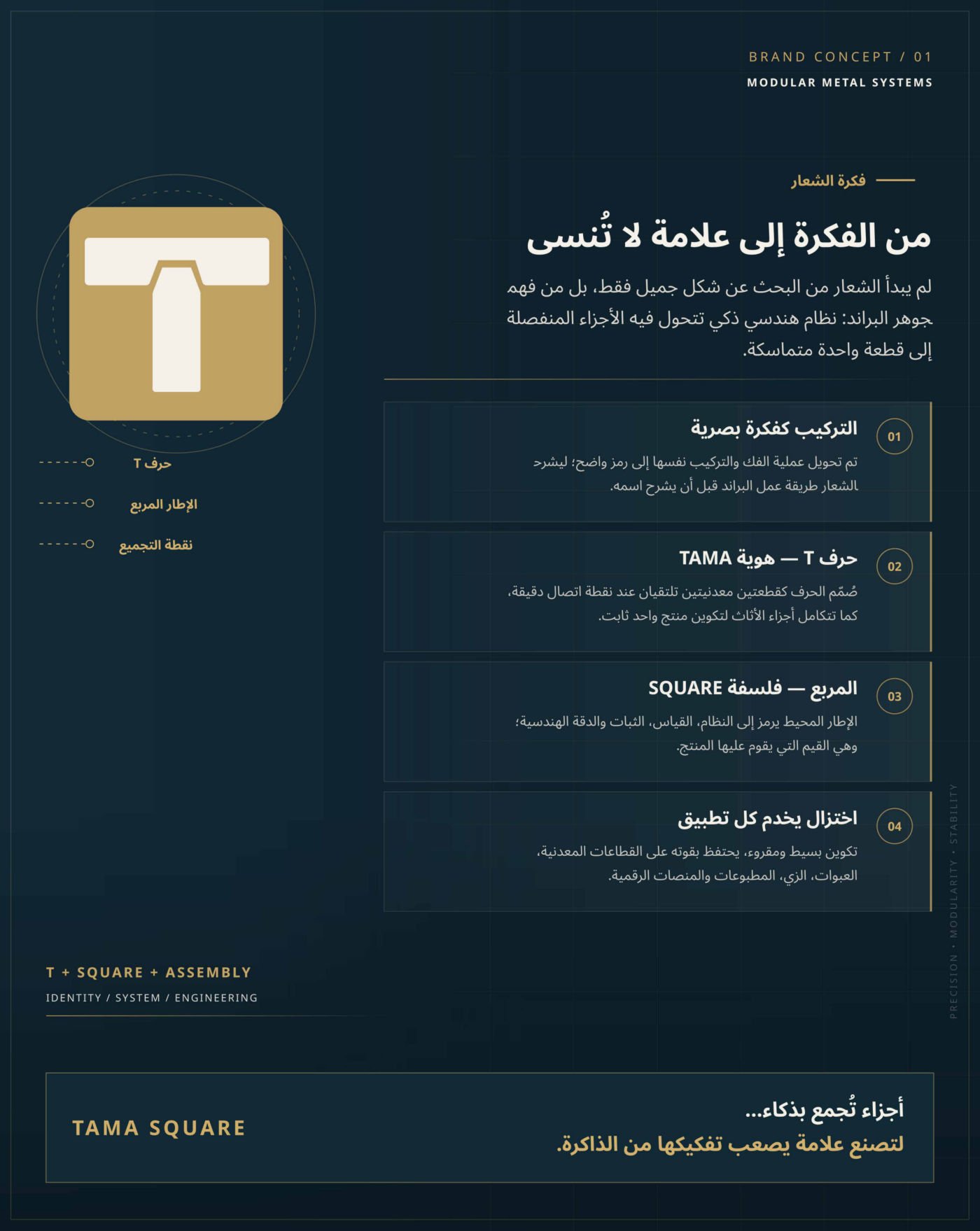
A letter T made of two pieces meeting at one precise joint, inside a square frame that stands for order and measure. It is the same idea behind our knock-down furniture: separate parts becoming one solid piece
Steel thickness, section, part count, assembly time, warranty — every number on a product page has a written source. A number that isn't documented yet isn't published at all; it reads “Pending verification” until the evidence arrives
In a market that sells furniture by the photo and the promise, we chose to sell it by the specification. The engineering drawing sits inside the product gallery, not behind a hidden tab, and the load test is published with its method and date — or not at all
This isn't a marketing line; it's a working rule inside the workshop and the academy alike: what we can't prove, we don't write
Four stations under one roof: design and analysis, cutting and welding, finishing and testing, packing and shipping. No third party between the drawing and the product — and the same stations are taught in the academy



Four values that came out of the square around the letter — and show up in every product and every lesson
Section and thickness are set by load analysis, not by what the market happens to stock. The drawing comes first — then the first sheet of steel
Every product knocks down, assembles with one key and ships as a regular parcel. Separate parts — one solid result
Steel in a chosen section, powder-coated in specified approved colours — built to hold for years, not for a single season
A published specification, a source for every number, and temporary images labelled as such. What we can't prove, we don't write
Dates are published once they arrive, documented, from the client — the same rule as every other number on this site
A workshop and one decision: a section chosen by load analysis, not by what happens to be available
Date pending from the clientThe clothes rack: 5 parts, one key, a regular parcel, and an engineering drawing on the product page
Date pending from the clientA written method and a report published on the product page — the number is not published before it
Status pending verificationThe first Arabic-language course in blow-mould design, with a complete free lesson before any commitment
Date pending from the clientOne team designs, builds and teaches — each role answers for a number published on the product page
SolidWorks modelling and load analysis that fix the section and thickness before the first sheet is cut. The drawing you see on the product page starts here
The drawing on the product page →Cutting, bending and assembly in chosen sections — not in whatever the market stocks. No third party between the drawing and the product
How we make →Electrostatic powder coating in specified approved colours, and load testing to a written method — before any number is published
The specification table →A blow-mould design engineer with 12 years' experience, teaching the same method the clothes rack was designed with
The course page →Start from either end: a published specification in the shop, or a complete free lesson in the academy. A quote within 48 hours on WhatsApp